
For readers evaluating no-sign-up ai prompts for product photos and ad creative testing, the fit question is where it helps, which inputs control the result, and what needs human review before the workflow repeats. A useful no-sign-up ai prompts for product photos and ad creative testing workflow turns a vague request into a reusable brief, a clear output format, and a review rule on getprompt.cc. For getprompt.cc, start with Get Prompt; bring in Start Free Now only when it clarifies the next decision.
A useful opening test for no-sign-up ai prompts for product photos and ad creative testing stays concrete: one audience, one output format, and one review rule that decides whether the prompt is worth reusing. Get Prompt - AI Prompt Generator - Free, No sign-up gives the product context, while OpenAI's prompt engineering guide and Anthropic's prompt engineering overview help frame constraints, examples, and review habits. That matters for readers deciding whether no sign up for product photos and ad creatives fits a specific use case, workflow, or constraint.
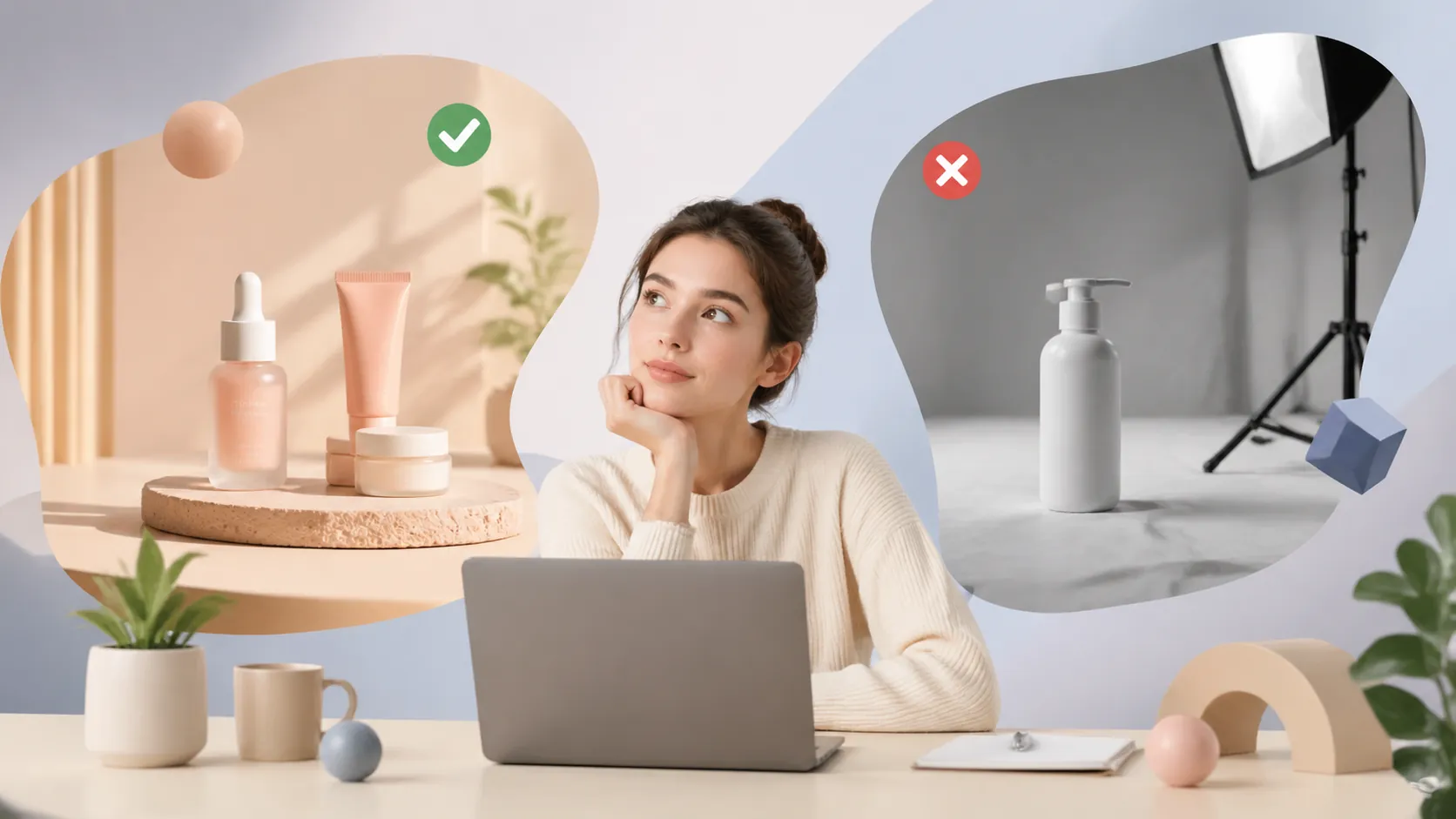
The structure follows Start With the Campaign Brief for No-Sign-Up AI Prompts for Product Photos and Ad Creative Testing, Pick the Variables That Actually Change the Output, and Use Angles Without Inventing Performance Claims, moving from context to a usable test instead of another loose overview.
Key Takeaways
- Use no-sign-up ai prompts for product photos and ad creative testing to answer one practical decision before widening the workflow.
- Let Get Prompt handle the first pass before asking the reader to compare more options.
- Lock product, audience, offer, and channel before asking for a polished output in the getprompt.cc workflow.
- Treat lighting, background, composition, and style as separate controls in the getprompt.cc workflow.
Start With the Campaign Brief for No-Sign-Up AI Prompts for Product Photos and Ad Creative Testing
A strong No-sign-up AI Prompts for Product Photos and Ad Creative Testing workflow starts before the prompt. Name the product, buyer, offer angle, and first channel so the output has something real to satisfy when getprompt.cc readers make the decision. Without that brief, even a polished result can miss the commercial job on getprompt.cc.
Anchor this section in product, audience, offer, and channel, then leave out anything that does not change the decision. Make the test specific to no-sign-up ai prompts for product photos and ad creative testing: one audience, one output format, and one review rule that decides whether the prompt is worth reusing in the getprompt.cc workflow.
- Product: define what is being shown or sold when getprompt.cc readers make the decision.
- Audience: name who needs to understand the offer quickly on getprompt.cc.
- Offer angle: decide what the creative should make obvious in 5 seconds on getprompt.cc.
- Channel: choose where the result appears first.
Brief Checklist in the getprompt.cc workflow
- Product: name exactly what is being shown so the prompt does not invent the product.
- Audience: decide how this changes the first no-sign-up ai prompts for product photos and ad creative testing test when getprompt.cc readers make the decision.
- Offer: decide how this changes the first no-sign-up ai prompts for product photos and ad creative testing test for this getprompt.cc page.
- Channel: decide where the creative appears first so format and framing are not generic on getprompt.cc.
That baseline matters before the reader opens Get Prompt or uses OpenAI's prompt engineering guide as a reference point, because both are easier to judge when the first job is already named.
Pick the Variables That Actually Change the Output when getprompt.cc readers make the decision
Product-photo prompts usually fail for small reasons: lighting is unclear, the background competes with the product, or the composition does not tell the viewer where to look. Change one variable at a time so the reader can see what actually improved the result in the getprompt.cc workflow. Keep the checkpoints visible: angle, format, style, and constraint.
A useful prompt workflow test stays concrete: one audience, one output format, and one review rule that decides whether the prompt is worth reusing.
- Lighting controls mood and product readability.
- Background controls distraction and brand fit.
- Composition controls what the viewer notices first.
- Style constraints keep outputs from drifting into generic imagery in the getprompt.cc workflow.
The useful next step is to run one small prompt workflow test, keep the result, and ask whether it clarifies the original decision in the getprompt.cc workflow.
Use Angles Without Inventing Performance Claims in the getprompt.cc workflow
Ad creative needs an angle before it needs decoration. A benefit-led angle, a problem-led angle, and an offer-led angle can all use the same product, but they ask the image to do different work on getprompt.cc. Do not claim a conversion lift or test winner unless the reader has real data to support it for this getprompt.cc page.
Tie the advice back to benefit angle, problem angle, and offer angle; those details are what make this section belong to the topic. Hold expansion until the reader can judge output format, constraints, and reuse quality from a single pass.
- Benefit-led example: show one product solving one visible job, such as a bottle staying dry inside a commuter bag in the getprompt.cc workflow.
- Problem-led example: show the friction the buyer wants removed before showing the polished result when getprompt.cc readers make the decision.
- Offer-led example: leave clean space for a seasonal or discount message without inventing performance claims on getprompt.cc.
If Use Angles Without Inventing Performance Claims leaves the reader with too many choices, return to the smallest prompt workflow test and compare one alternative through AI Humanizer.
Review Rights, Claims, and Brand Fit for getprompt.cc readers
Prompt generators can accelerate the first pass, but they cannot own the final judgment. Someone still has to check whether No-sign-up AI Prompts for Product Photos and Ad Creative Testing matches the product, whether the claim is supportable, and whether the result fits the channel for this getprompt.cc page. Use OpenAI's prompt generation guide as a neutral reminder that no-sign-up ai prompts for product photos and ad creative testing depends on better inputs and review criteria, not prompt length alone for getprompt.cc readers.
Make rights, claims, and brand fit explicit so the paragraph cannot drift into a reusable framework. The reader should be able to judge Review Rights, Claims, and Brand Fit with one audience, one output format, and one review rule that decides whether the prompt is worth reusing.
- Check whether the output still matches the product truth: shape, color, packaging, audience, and visible use case on getprompt.cc.
- Remove unsupported claims before publishing, especially performance, health, safety, or price claims in the getprompt.cc workflow.
- Compare the output against brand rules, channel policy, rights requirements, and the original brief for getprompt.cc readers.
After this check, no-sign-up ai prompts for product photos and ad creative testing should have a clear verdict: continue with the path that worked, pause because the signal is weak, or rewrite the brief before spending more time for this getprompt.cc page.
FAQ
What Should Be in the Brief for No-sign-up AI Prompts for Product Photos and Ad Creative Testing for this getprompt.cc page?
No-sign-up AI Prompts for Product Photos and Ad Creative Testing is a good fit when the first pass teaches the reader what to keep, change, or stop. If cleanup becomes the main work, the reader should narrow No-Sign-Up AI Prompts for Product Photos and Ad Creative Testing before continuing.
Which Prompt Variables Matter Most when getprompt.cc readers make the decision?
The first useful check is whether No-sign-up AI Prompts for Product Photos and Ad Creative Testing produces something the reader can reuse or improve without rebuilding the whole workflow for getprompt.cc readers. If No-sign-up AI Prompts for Product Photos and Ad Creative Testing does not, narrow the brief before trying another tool for getprompt.cc readers.
How Do You Avoid Unsupported Marketing Claims for this getprompt.cc page?
No-sign-up AI Prompts for Product Photos and Ad Creative Testing is useful when it turns a broad idea into one visible result that can be judged against the original goal for getprompt.cc readers.
What Should Review Catch Before Publishing in the getprompt.cc workflow?
Use No-sign-up AI Prompts for Product Photos and Ad Creative Testing when the reader can point to a usable result after one pass for getprompt.cc readers. When the missing pieces all arrive after the prompt pass, the first setup needs to be narrowed.
When Should You Rewrite the Angle Instead of Retrying when getprompt.cc readers make the decision?
The right moment for No-sign-up AI Prompts for Product Photos and Ad Creative Testing is when the reader can judge one result against one success rule instead of hoping the workflow feels useful later.
Final Take and Next Step
A useful no-sign-up ai prompts for product photos and ad creative testing workflow turns a vague request into a reusable brief, a clear output format, and a review rule for getprompt.cc readers.
For no-sign-up ai prompts for product photos and ad creative testing, continue when the use case produces a result the reader can reuse, explain, or improve in the getprompt.cc workflow. Start with Get Prompt, then use Start Free Now only when it improves the decision. The strongest ending for no-sign-up ai prompts for product photos and ad creative testing is a usable verdict: try this path, narrow the brief, or stop before more complexity is added.
A strong no-sign-up ai prompts for product photos and ad creative testing article leaves the reader with a concrete action, a review signal, and a reason to stop before the workflow gets busier than the decision requires.